Oak Bluffs, Massachusetts · Established 2018 · MA Licensed & Insured Free quote within one business day · Get in touch →
Hardscaping

Retaining Wall Martha's Vineyard

Stone and masonry retaining walls that manage grade, control runoff, protect planting beds, and create usable terraced areas on Vineyard properties. Drainage engineered before construction - the difference between a wall that holds for decades and one that fails within a few seasons.

★★★★★Hardscaping · MA Licensed & Insured

Retaining walls on Martha's Vineyard hold back soil where grade changes create instability or unusable slopes. Infinity builds fieldstone, granite, and concrete-block walls with footing depth, backfill drainage, and materials matched to freeze-thaw conditions and sandy island soils. Walls under four feet typically require no structural engineering.

Hardscaping

When a Retaining Wall is Needed

Grade changes

Any slope that needs to be made into usable level space requires a retaining structure. A sloped yard with 24 to 36 inches of elevation change across a 10-foot horizontal run typically needs a wall or a series of low walls to create a stable terrace.

Slope stabilization

Erosion along a slope, particularly on sandy Vineyard soils, accelerates with heavy rain events. A wall on the lower portion of a slope arrests the movement and stabilizes the grade.

Planting bed containment

Raised planting beds against a house foundation or along a property boundary are a common retaining wall application. These walls run lower - typically 18 to 36 inches - and carry less lateral load than grade-retention walls, but still need drainage to prevent water pooling against the structure.

Driveway and parking areas

Where a driveway cuts into a slope or a parking area needs a level surface adjacent to sloped terrain, retaining walls hold the cut bank and prevent slippage.

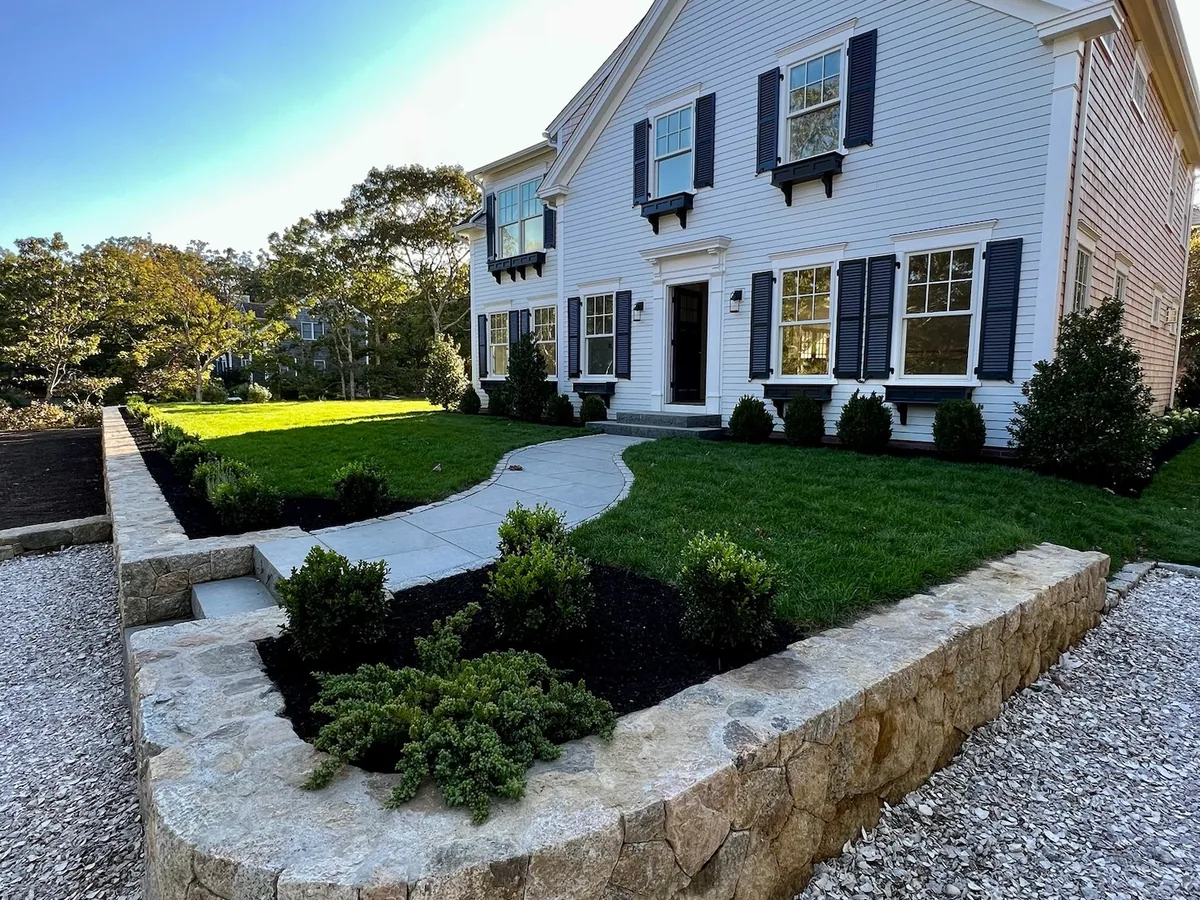
Curved natural-stone retaining wall along a waterfront Martha's Vineyard lawn
Hardscaping

Materials for Vineyard Retaining Walls

Natural fieldstone. The traditional choice for Vineyard properties and the material that reads as most integrated with the island's landscape character. Properly laid dry-stack or mortared fieldstone walls are aesthetically appropriate across a wide range of property types, from historic cottages to modern construction. Dry-stack walls allow natural drainage through the wall face, which is both structurally sound for low-load applications and in keeping with the visual character of the stone.

Granite block. Cut granite provides a more formal, precise look than fieldstone. Commonly used for walls adjacent to formal patios, front entries, or properties where a clean geometric line is preferred. Granite's density and durability make it well-suited to high-load applications.

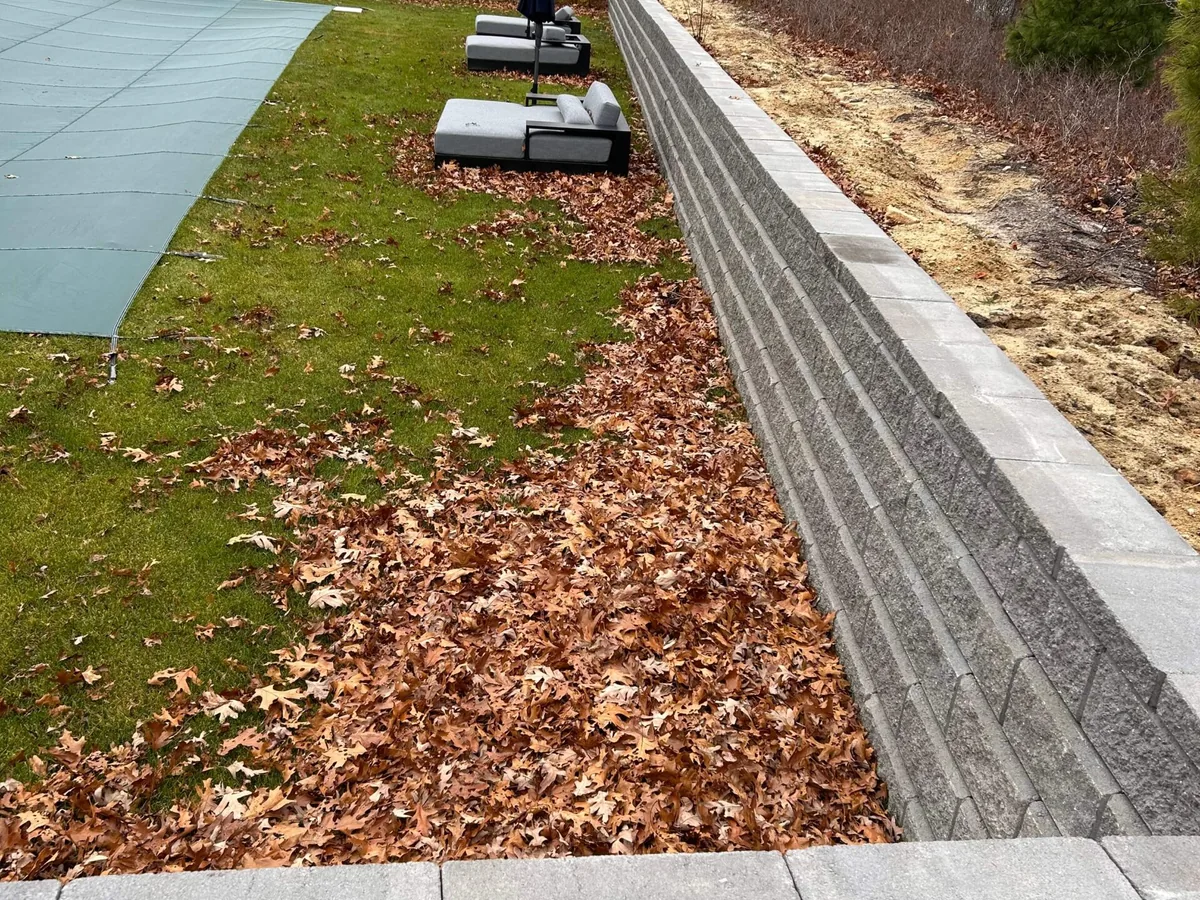
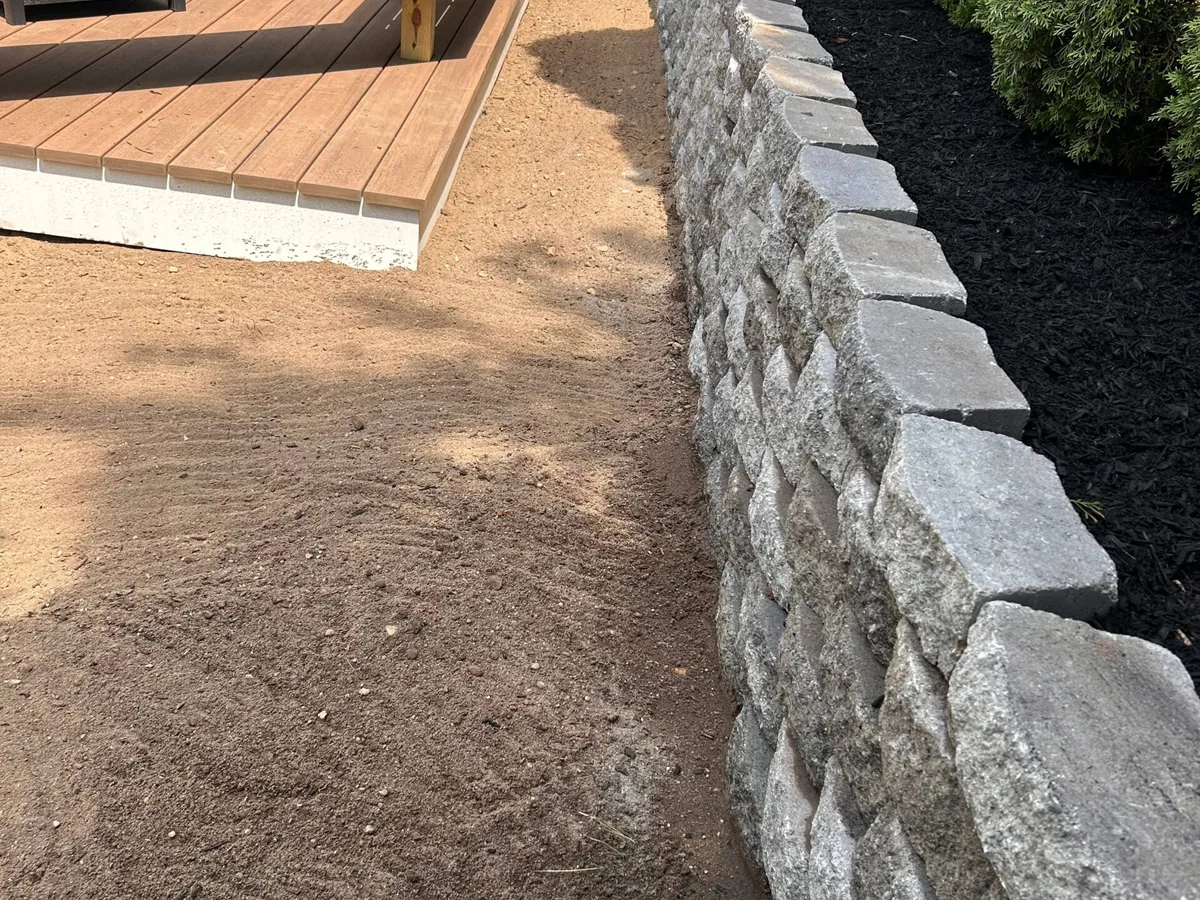
Segmental retaining wall block. Engineered interlocking block systems (Allan Block, Unilock, Versa-Lok and similar) are a reliable choice for walls requiring structural certification, particularly those over 4 feet in height. The interlocking geometry provides more consistent lateral strength than mortared masonry in variable soil conditions.

Timber. Pressure-treated timber walls are occasionally appropriate for lower applications in garden areas. Timber degrades faster than stone in coastal conditions and should not be specified for walls where longevity is the priority. We generally recommend against timber for walls over 2 feet or in high-exposure coastal locations.

Planning This Service

Frequently asked questions

A dry-stack wall uses no mortar - the stones are shaped and placed to lock against each other through weight and gravity. Water drains freely through the stone joints. A mortared wall uses a concrete or mortar bed and joints to bond the units. Mortared walls are generally stronger for taller applications but require weep holes for drainage that dry-stack provides naturally. Dry-stack is often preferred aesthetically for lower fieldstone walls on Vineyard properties.

Ready to schedule this service?

Request a quote and get a service plan matched to your property, schedule, and seasonal needs.

Ready to elevate your property?

Request a Free Quote