
Custom plant feeding
Different plants have different nutritional needs. We apply tailored organic nutrient blends to feed specific groups, such as acid-loving evergreens, flowering broadleaves, ornamental trees, and boxwoods.
Feed your ornamental plantings safely and effectively. We design custom shrub fertilization programs utilizing organic nutrients and soil conditioners tailored to Vineyard soils.
Shrub fertilization on Martha's Vineyard uses organic-based, slow-release programs tailored to the planting palette: boxwoods need different nutrients than rhododendrons, and hollies need different micronutrients than spireas. Infinity Landscaping designs programs from soil and tissue tests, addressing chlorosis associated with elevated soil pH or micronutrient availability issues where testing confirms them. Best applications run in early spring and again in early fall.
Different plants have different nutritional needs. We apply tailored organic nutrient blends to feed specific groups, such as acid-loving evergreens, flowering broadleaves, ornamental trees, and boxwoods.
We apply nutrients directly to the root zone. By injecting liquid organic nutrients and mycorrhizae into the soil around the drip line, we ensure root systems absorb nutrients efficiently with zero runoff.
Vineyard signature plants like hydrangeas, rhododendrons, azaleas, and holly prefer acidic soil. We apply specialized organic acidifying nutrients to maintain low soil pH, supporting rich color and blooms.
Healthy plants depend on healthy soil biology. We apply natural soil conditioners, humates, and compost extracts to feed beneficial soil fungi and bacteria, helping plants build natural disease resistance.
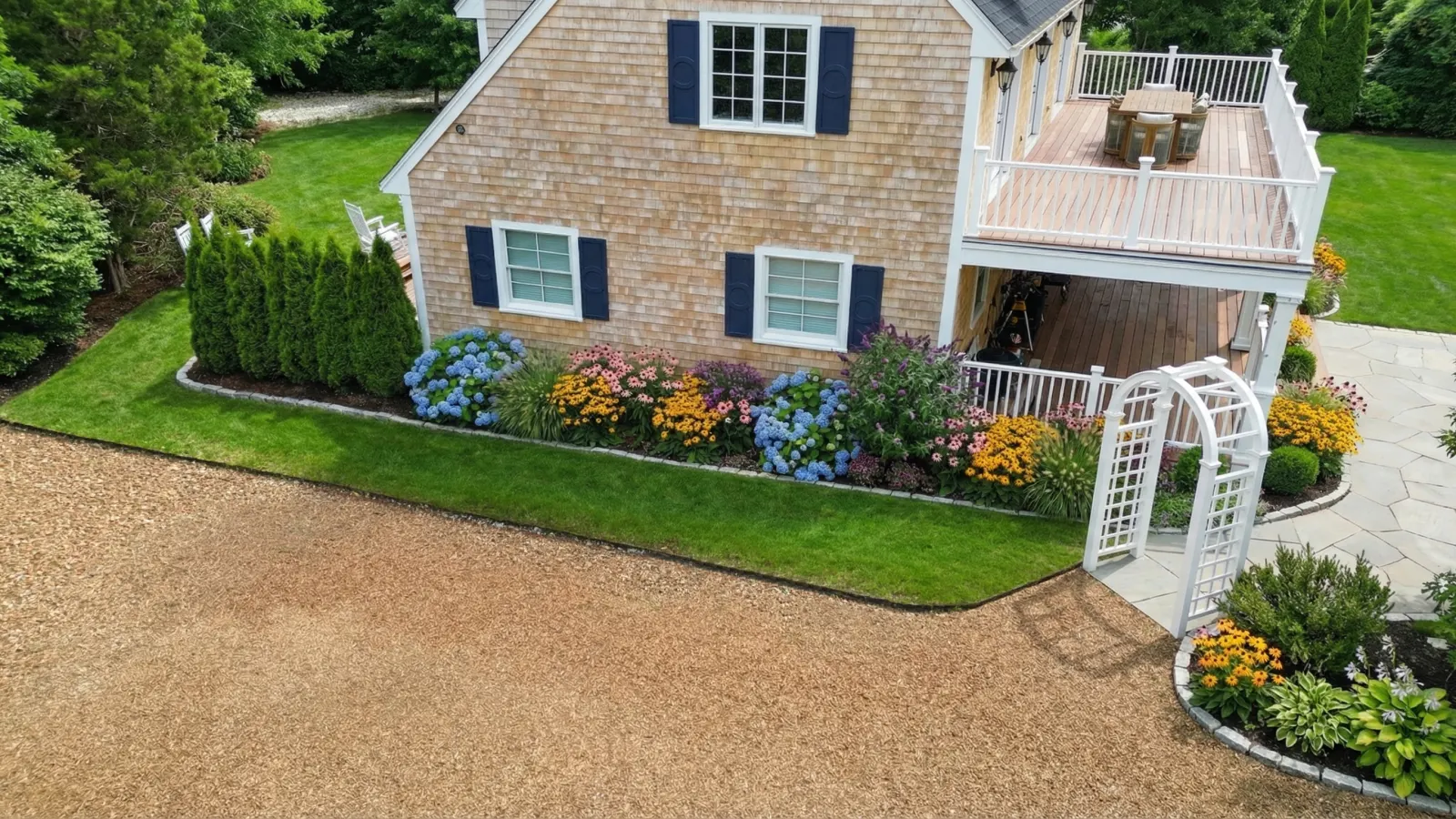
The sandy soils of Martha's Vineyard are naturally low in organic matter and struggle to retain key nutrients like nitrogen, potassium, and trace minerals. Broadleaf evergreens and ornamental shrubs planted in this soil can quickly show signs of stress, including pale leaves, thin growth, and poor flowering.
Our shrub fertilization strategy focuses on building the soil's organic structure and biology. Rather than applying synthetic, high-nitrogen fertilizers (which can burn roots and wash through the sand), we apply slow-release organic nutrients. These materials bind to soil particles, feeding the roots slowly and encouraging healthy soil microbiology. This approach helps plants survive summer drought, winter winds, and salt exposure.
Review plantings for nutrient deficiencies (such as yellowing leaves or stunted twigs).
Test soil acidity around specific groups (like hydrangeas and evergreens).
Mix organic slow-release granular products or prepare liquid deep-root blends.
Apply nutrients around the drip line of trees and shrubs, or inject liquid blends into the root zone.
Lightly water the root zone to settle the nutrients and activate the soil biology.
A few details help us understand the work before the first conversation.
Identify lawns, beds, shrubs and seasonal tasks you would like our team to handle.
Send current photographs and note any neglected areas or recent planting.
Share your arrival dates, property access arrangements and preferred frequency of visits.