Oak Bluffs, Massachusetts · Established 2018 · MA Licensed & Insured Free quote within one business day · Get in touch →
Hardscaping

Stone Veneer Installation Martha's Vineyard - Walls, Coping & Planters

Stone veneer transforms concrete block, poured concrete, and structural steel into surfaces that read as natural stone - on foundation walls, retaining wall faces, outdoor kitchen frames, and raised planter boxes. Materials and adhesive systems specified for coastal freeze-thaw conditions.

★★★★★Hardscaping · MA Licensed & Insured

Stone veneer installation on Martha's Vineyard applies a stone facing to foundation walls, retaining-wall faces, outdoor kitchen surrounds, and raised planters; coping caps wall edges and pool surrounds. Infinity uses natural and quality manufactured stone with coastal-grade substrate preparation. Sealant choice matters in salt air; lower-grade veneers tend to delaminate at exposed edges.

Hardscaping

Where Stone Veneer Is Used

Foundation walls

The above-grade portion of a house foundation is a common veneer application. A concrete block or poured concrete foundation given a natural or manufactured stone veneer reads as part of the landscape rather than a utilitarian surface. On Vineyard properties where the foundation is visible above grade due to site topography, this finish makes a significant difference in how the house sits in its landscape.

Retaining wall faces

A poured concrete or concrete block retaining wall built for its structural properties can be finished with stone veneer to match the aesthetic of the landscape. The structural wall handles the engineering requirement; the veneer provides the visual result of a full stone wall. This combination is common where a full-depth stone wall would require more material and labor than the structural application justifies.

Outdoor kitchen and grill stations

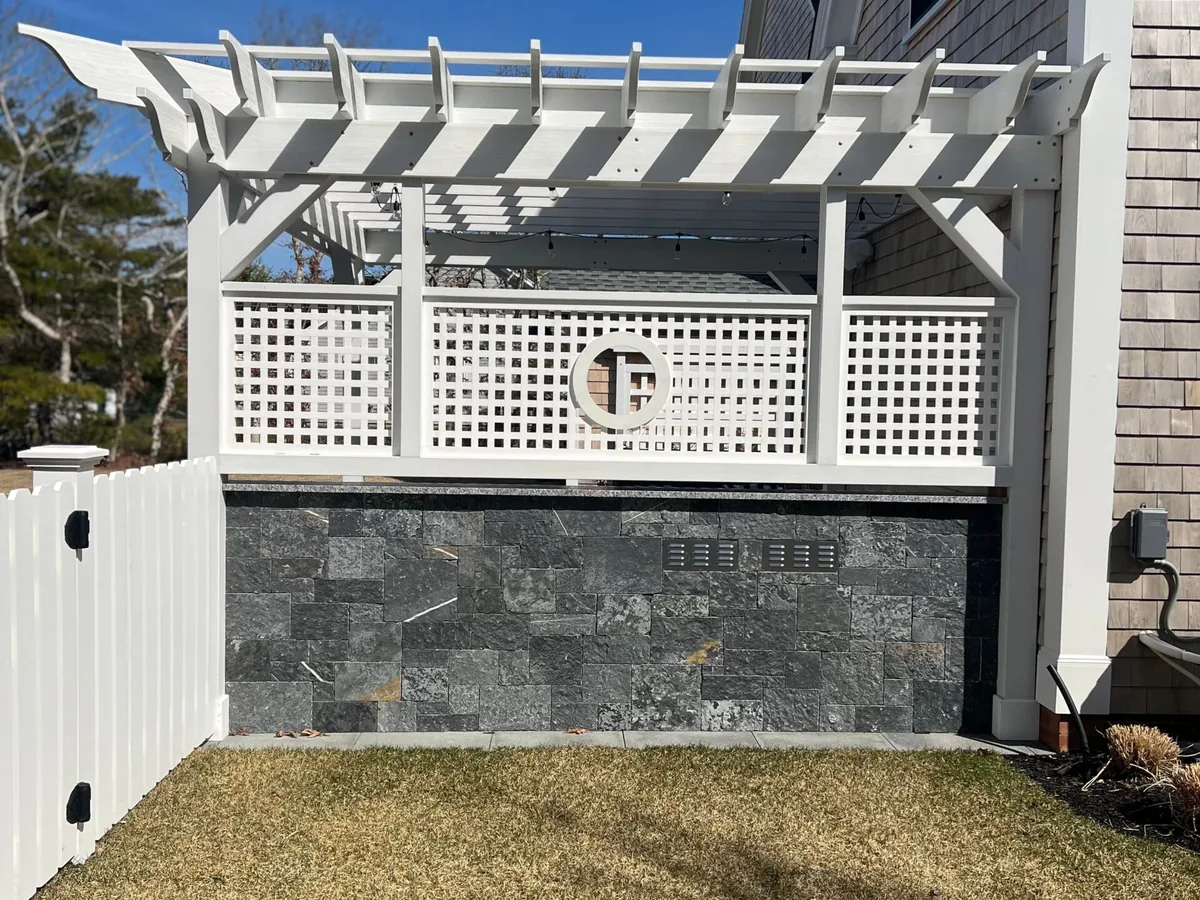
The exterior of an outdoor kitchen structure - typically built on a concrete block or steel frame - is finished with veneer to match or complement adjacent patio and planting materials. Stone veneer on an outdoor kitchen frame is the most common exterior finish on Vineyard properties where the kitchen is positioned as a focal point.

Raised planter boxes and garden walls

Structural planters built for roof decks, terraces, or elevated garden areas are frequently finished with veneer. The planter box provides the structural capacity and waterproofing; the veneer provides the visual finish that integrates the planter into the surrounding design.

Pool coping and water features

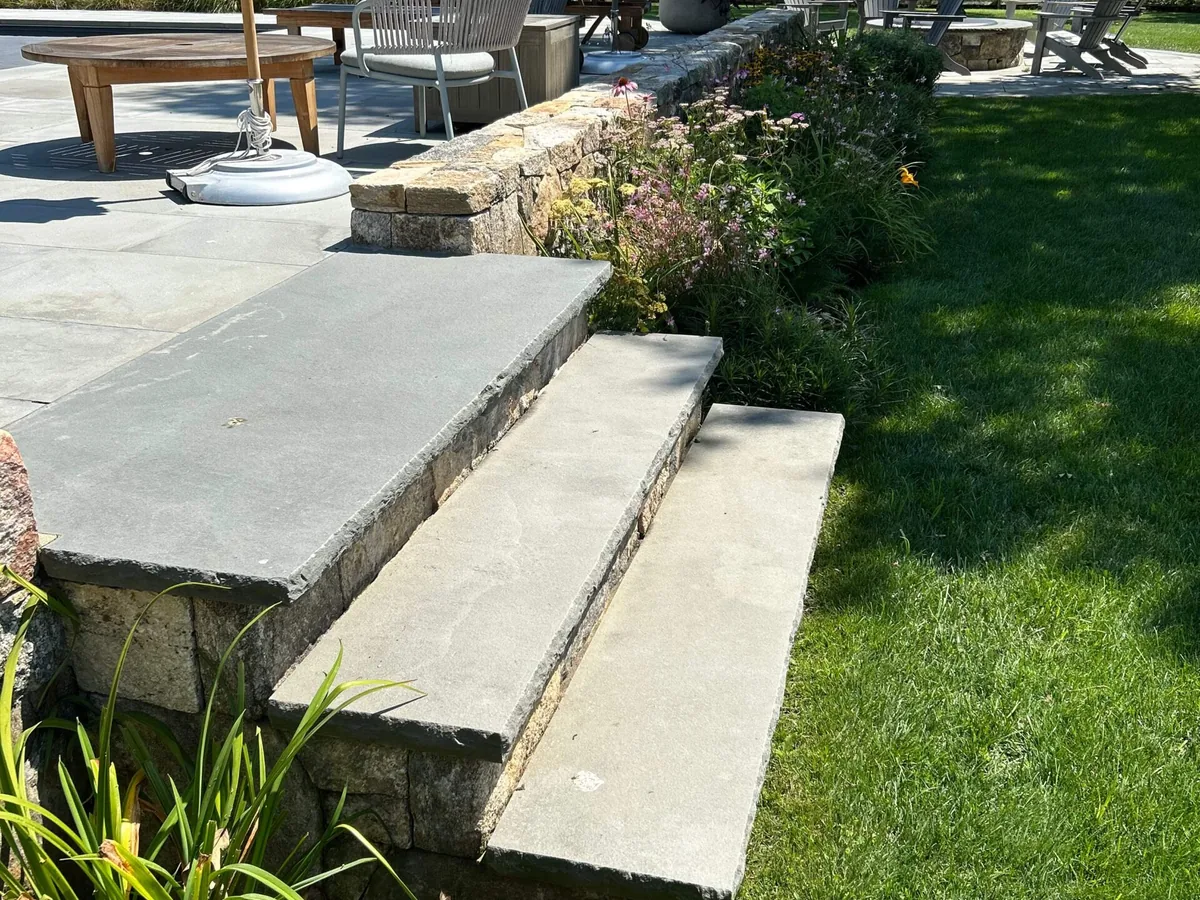
Stone coping at the pool edge and veneer on pool walls and water feature structures are common applications where the visual continuity of stone from deck surface to pool edge is part of the design intent.

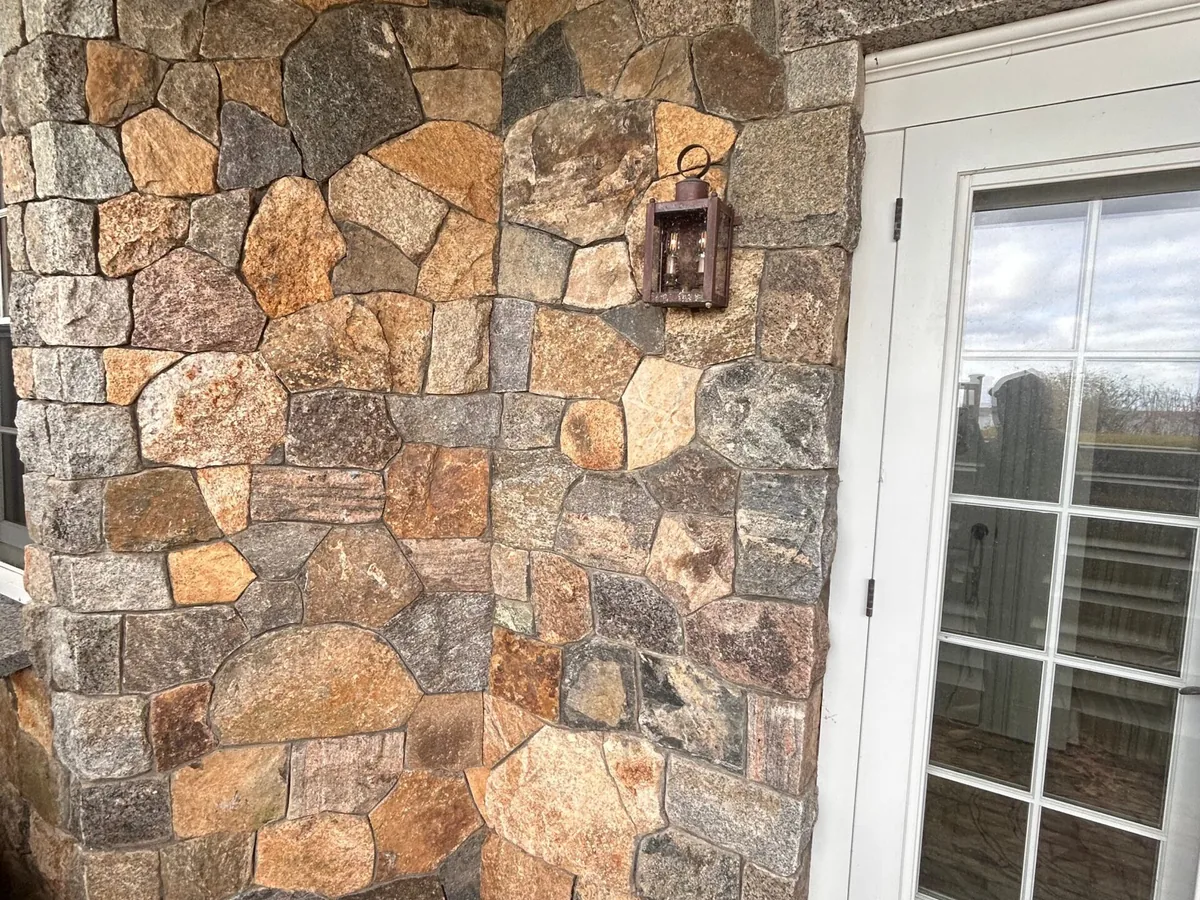
Natural stone veneer wall beside a bluestone patio on Martha's Vineyard
Hardscaping

Material Options

Natural stone veneer is quarried stone cut to a consistent thickness (typically 1 to 2 inches) and a range of face sizes. The surface character, color variation, and texture are those of real stone - because it is real stone, just thinner than structural stone. Species common in Vineyard applications include:

Natural veneer requires proper substrate preparation - a scratch coat of mortar on a metal lath substrate over concrete or masonry, or direct application over appropriately textured concrete. Adhesion systems must be rated for exterior, freeze-thaw applications.

Manufactured veneer (Eldorado Stone, Cultured Stone, ProVia, and similar brands) is a concrete-cast product designed to replicate natural stone in appearance. Modern manufactured veneer products are difficult to distinguish from natural stone at normal viewing distances, are available in a broader range of consistent profiles and colors than natural stone, and are lighter in weight - which simplifies installation and reduces structural load requirements.

For coastal Vineyard applications, we specify manufactured veneer products rated for high-moisture, freeze-thaw conditions. Not all manufactured veneer products meet this specification. The designation to look for is ASTM C1670 compliance.

  • Ledger stone (stacked flat-face slate or quartzite): clean horizontal lines, works well on contemporary structures
  • Fieldstone veneer (rounded face fieldstone cut to a flat back): integrates well on traditional Vineyard property styles
  • Granite veneer: dense, low-maintenance, appropriate for high-exposure coastal applications

Process

Substrate Preparation and Installation

01

Insufficient scratch coat

A veneer applied directly to smooth concrete without a proper scratch coat or lath system does not achieve adequate mechanical bond. In freeze-thaw conditions, the inadequate bond fails as the substrate and veneer cycle at slightly different rates.

02

Moisture migration behind the veneer

If the substrate is not properly waterproofed or if the veneer installation creates an enclosed moisture pocket, water trapped behind the veneer expands during freeze events and separates the veneer from the substrate.

03

Wrong adhesive system

Standard tile adhesive is not appropriate for exterior, outdoor stone veneer in freeze-thaw conditions. Polymer-modified mortars rated for exterior freeze-thaw applications are required.

Planning This Service

Frequently asked questions

Properly installed stone veneer on the appropriate substrate with the correct adhesive system for freeze-thaw conditions should last 20 to 30-plus years with minimal maintenance. Premature failures are almost always substrate preparation or adhesive specification issues, not the veneer material itself.

Ready to schedule this service?

Request a quote and get a service plan matched to your property, schedule, and seasonal needs.

Ready to elevate your property?

Request a Free Quote